



.svg)
.svg)
.svg%201.svg)



Get Business Email
No domain name required
Email Marketing
Discover Neo today!

E-commerce isn't slowing down. Total revenue is expected to hit $3.88 trillion in 2026, and if you want a piece of that, your marketing tools need to actually work for you, not against your budget.
Klaviyo is genuinely good. Most people in e-commerce know that. But "good" doesn't always mean "right for you." A lot of businesses end up paying for a stack of features they'll never touch, and that gets old fast.
So we put together this list of alternatives worth considering, tools that cover the same ground, sometimes better, and often for less money.
1. Omnisend
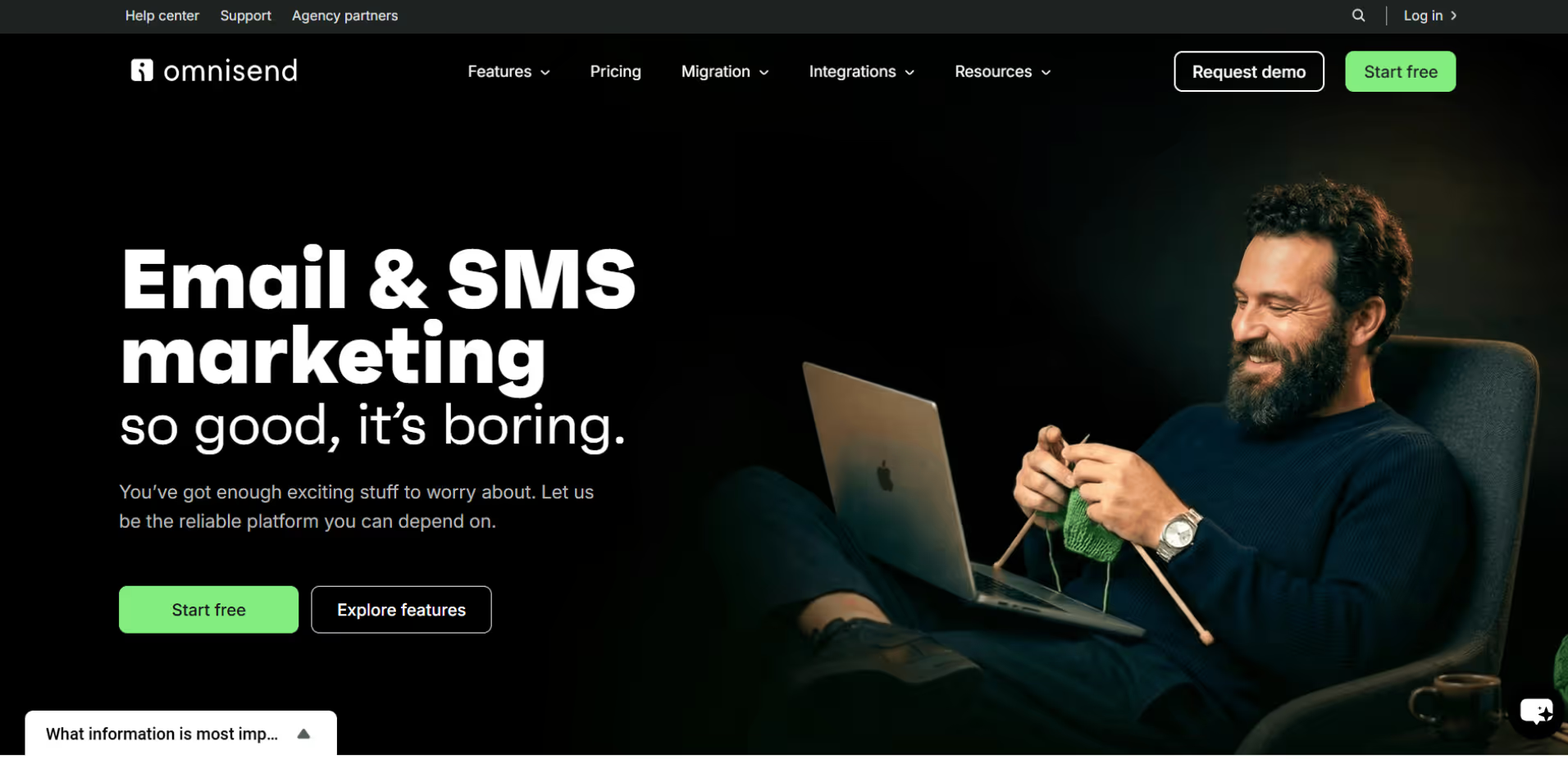
Omnisend is built for e-commerce, full stop. It's not trying to be everything to everyone. It's focused on mid-size stores that want real marketing power without hiring a dedicated ops person to manage it.
It connects natively with Shopify, WooCommerce, and BigCommerce, so product data and purchase behavior sync without any manual work. Agencies managing multiple clients will also appreciate being able to handle different stores from one account without the usual tab chaos.
Key features:
- AI tools across the board: segment builder, lifetime value predictions, product recommendations, and a copywriting assistant that also reviews your signup forms
- MCP integration: you can query store performance, create campaigns, and check metrics directly inside ChatGPT or Claude without switching between apps
- Global SMS + email: run email and SMS marketing together in one workflow and reach a global audience at competitive rates.
- Multi-store management: switch between brands or regions instantly, with shared assets and centralized billing
Pros:
- Customers report around $79 return for every $1 spent, and with 150K+ users and a 4.8 average rating, that's not a marketing line
- Their migration team rebuilds your setup in five days at no cost
- 24/7 support for all users, not just enterprise accounts
- Notably cheaper than Klaviyo for comparable features
Cons:
- Not a fit for B2B or service businesses; it's built around ecommerce workflows
- No standalone CRM for teams running long sales cycles
Pricing:
Free plan available with access to most core features. Paid plans from $16/month.
2. ActiveCampaign
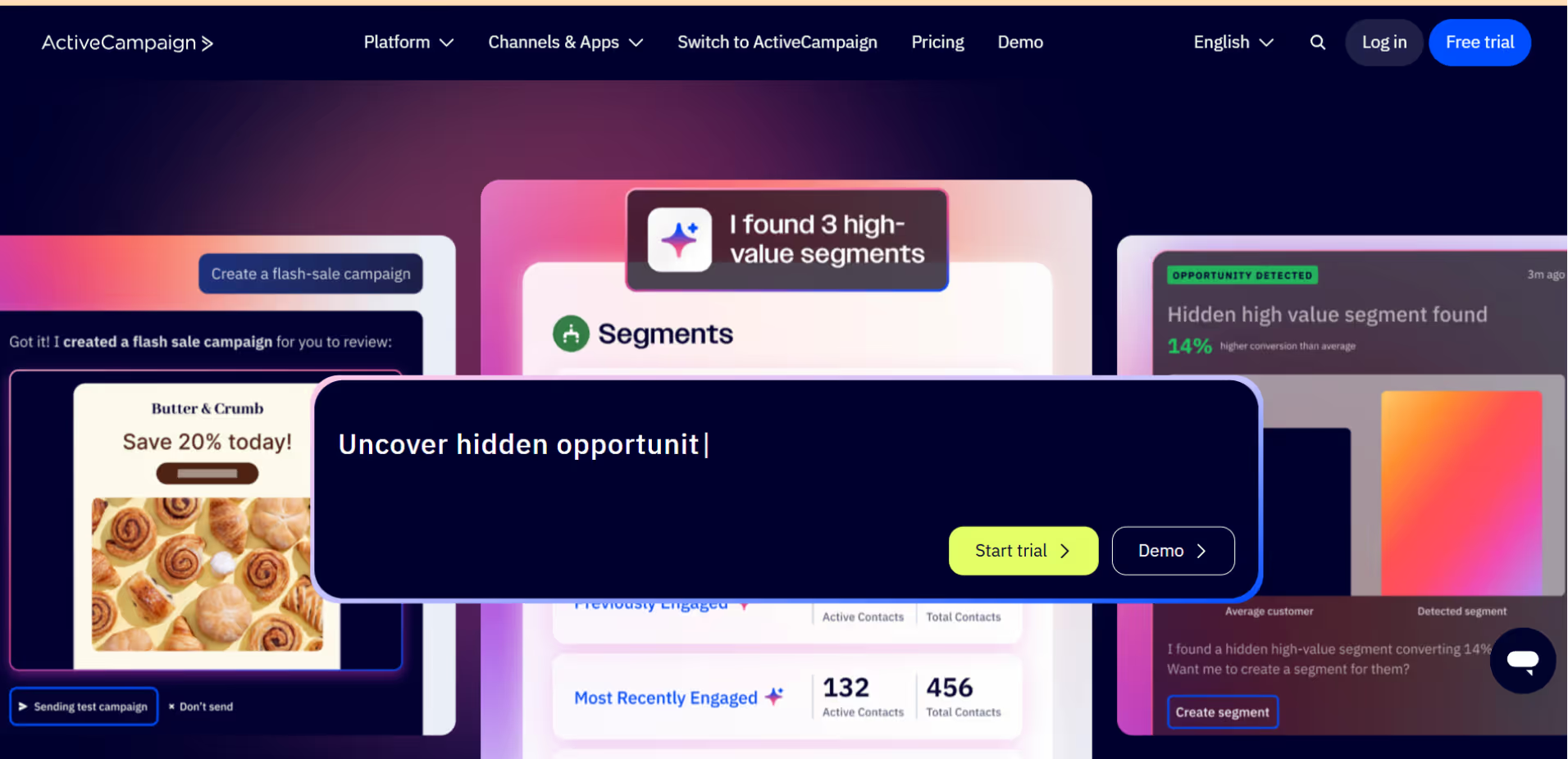
If your business runs complex funnels or your sales and marketing teams are constantly stepping on each other, ActiveCampaign is worth a serious look. It combines email automation with a built-in CRM in a way that actually feels intentional rather than stitched together.
The automation builder handles multi-step workflows with conditional logic that most tools won't touch. You can get genuinely granular, with triggers based on page visits, video views, document downloads, and more.
Key features:
- Advanced automation builder: complex branching logic for detailed customer journeys
- Built-in CRM: pipelines, deal tracking, and automated follow-ups in the same platform
- Site and event tracking: behavioral triggers based on real interactions, not just email opens
- Predictive sending: sends emails when each individual contact is most likely to open them
Pros:
- Works across business types, including SaaS, ecommerce, brick-and-mortar, and service businesses
- CRM and marketing living in one place removes a lot of internal friction
- Huge library of pre-built automation templates if you want a head start
- Deep segmentation using custom fields and behavioral tags
Cons:
- Takes time to learn; your team will need dedicated onboarding, not a quick afternoon
- Pricing climbs fast as your list grows or you need advanced features
Pricing:
14-day free trial. Paid plans from $15/month. CRM and advanced ecommerce features require higher tiers.
3. Mailchimp
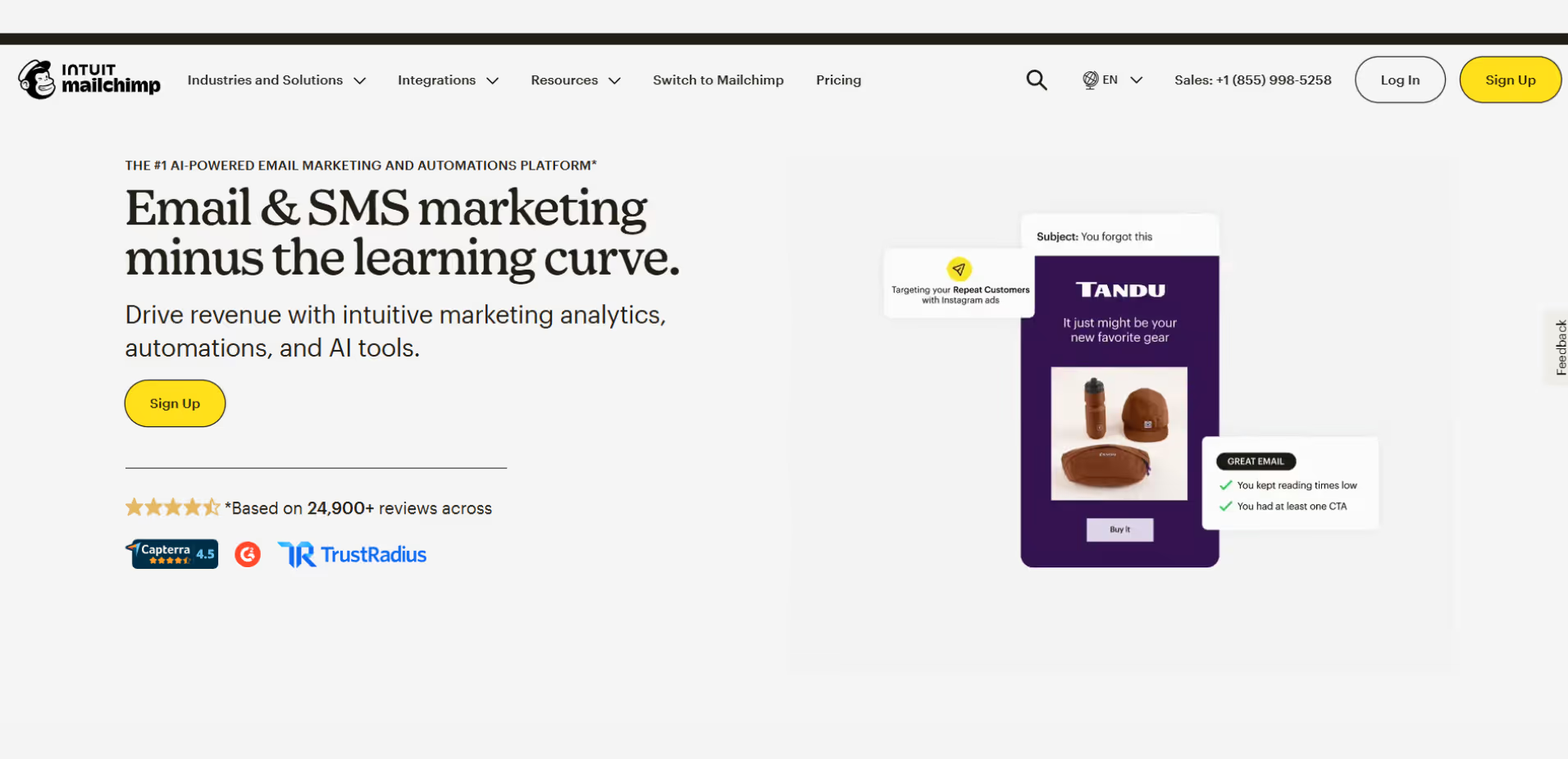
Mailchimp has grown up a lot. It's not the basic newsletter tool it used to be. It now covers website hosting, social posting, and a proper automation builder. For a business that wants most things under one roof without juggling five different subscriptions, it makes sense as a starting point.
The interface is one of the most approachable in the category. You don't need marketing experience to get a campaign out the door.
Key features:
- Customer journey builder: drag-and-drop automations from signup to purchase
- Creative assistant: generates email designs based on your brand colors and existing website
- Social media scheduling: basic organic posts alongside your email campaigns
- Behavioral targeting: automation triggers based on site activity and past email engagement
Pros:
- Enormous template library, useful if you want to move fast without touching any code
- Hundreds of native integrations covering most business tools and platforms
- Includes landing page builders and basic website hosting
- Easy to learn, fast to deploy
Cons:
- Billing based on duplicate contacts is a well-known frustration; you can end up paying for the same person multiple times
- Automation logic doesn't go very deep if you need complex workflows
Pricing:
Free for up to 250 contacts and 500 sends per month. Paid plans from $13/month, priced per audience rather than unique contacts.
4. Brevo
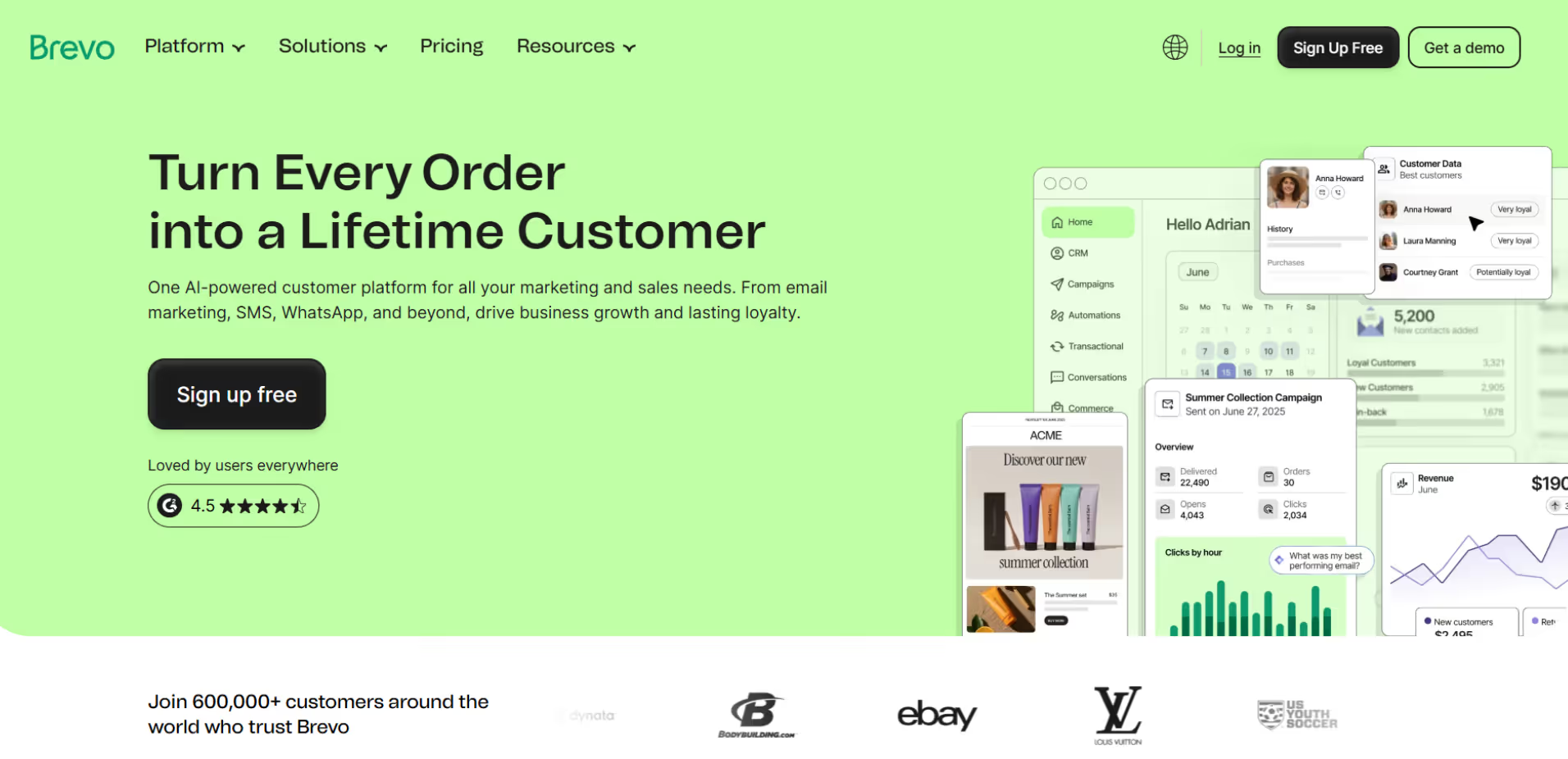
Brevo is one of the few platforms that genuinely brings transactional and promotional messaging together without making you feel like one is an add-on to the other. Email, SMS, WhatsApp, and transactional messages all live in the same place.
The billing model is what tends to win people over. You pay per email sent, not per contact stored. If you've got a large list but you're not blasting it every week, that structure can save you a meaningful amount each month.
Key features:
- Transactional email routing: reliable delivery for order confirmations, shipping updates, and account notifications
- WhatsApp campaigns: marketing and support messages on one of the world's most-used apps
- Meetings calendar: lets clients book directly on your calendar, with new contacts flowing into your marketing workflows automatically
- Shared inbox: manage replies and support tickets across channels from one place
Pros:
- Pay per send, not per contact, which is a big deal if you have a large but infrequently mailed list
- Strong deliverability infrastructure that handles high sending volume without issues
- International SMS works alongside email for global campaigns
- Unlimited contacts even on the free tier
Cons:
- Template selection is noticeably thinner than most competitors
- Support response times can be slow
Pricing:
Free plan for up to 300 emails per day. Paid plans from $9/month.
5. Drip
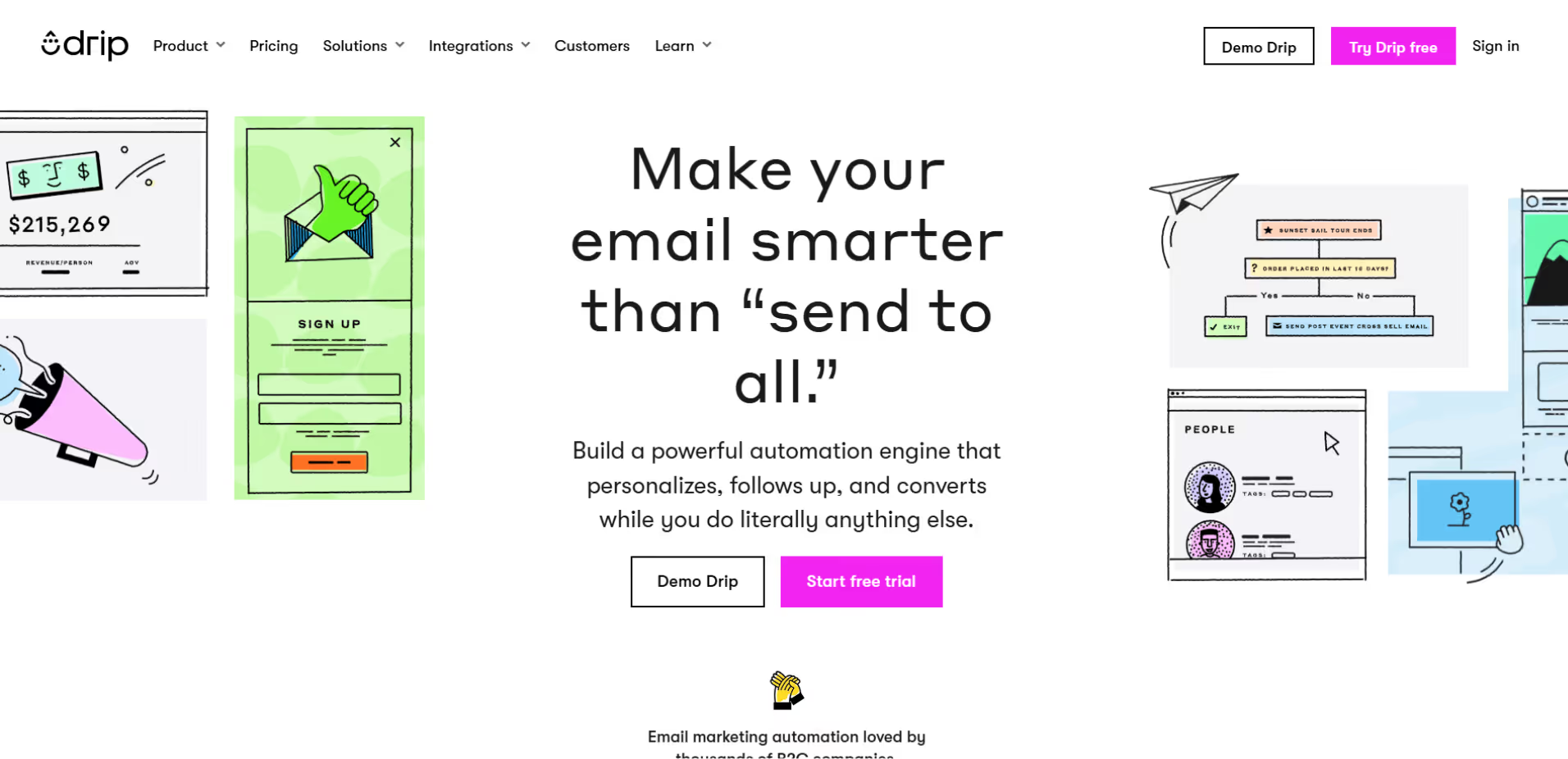
Drip leans hard into customer data, the kind that actually tells you how people shop, not just whether they opened an email. It pulls behavioral signals from across your store and uses them to power automations that feel less like broadcast campaigns and more like one-to-one conversations.
Think of it as having a personal shopper built into your marketing stack. If a customer browses a product three times but doesn't buy, Drip knows that.
Key features:
- Visual workflow builder: flowchart-style automation that connects shopper behaviors to emails and onsite messages
- Shopper activity tracker: monitors cart abandonment, product views, order frequency, and more
- Dynamic content: automatically changes images, copy, and offers based on past purchases or location
- Onsite campaigns: pop-ups and slide-ins triggered by what's in a visitor's cart right now
Pros:
- Data tracking built specifically for DTC brands, more detailed than most platforms
- The visual builder keeps complex sequences manageable
- Works smoothly with Shopify, WooCommerce, and BigCommerce
- Revenue attribution shows you exactly which campaigns are making money
Cons:
- Pure ecommerce focus means it's essentially useless for B2B, SaaS, or service businesses
- SMS is restricted in several international markets, so you may need a third-party tool for global reach
Pricing:
Starts at $39/month for up to 2,500 contacts, with all features included at that tier.
Conclusion
Picking the right platform comes down to being honest about what your business actually needs day to day.
If you run complex B2B sales with a team managing pipelines, ActiveCampaign is probably your best bet. The CRM integration alone makes it worth considering. For ecommerce brands focused on ROI, Omnisend consistently delivers. Brevo is the smart pick if you have a big list you don't email constantly. Drip rewards businesses that want to get serious about customer behavior data. And Mailchimp works well when you want one tool that handles the basics across the board.
Whatever you choose, the best marketing platform is the one your team will actually use, one that runs reliably in the background while you focus on growing the business.
Get Business Email
No domain name required
Email Marketing
Discover Neo today!
